NurseSavvy Cheat SheetDisease
Placental Abruption
Pathophysiology & Risk Factors
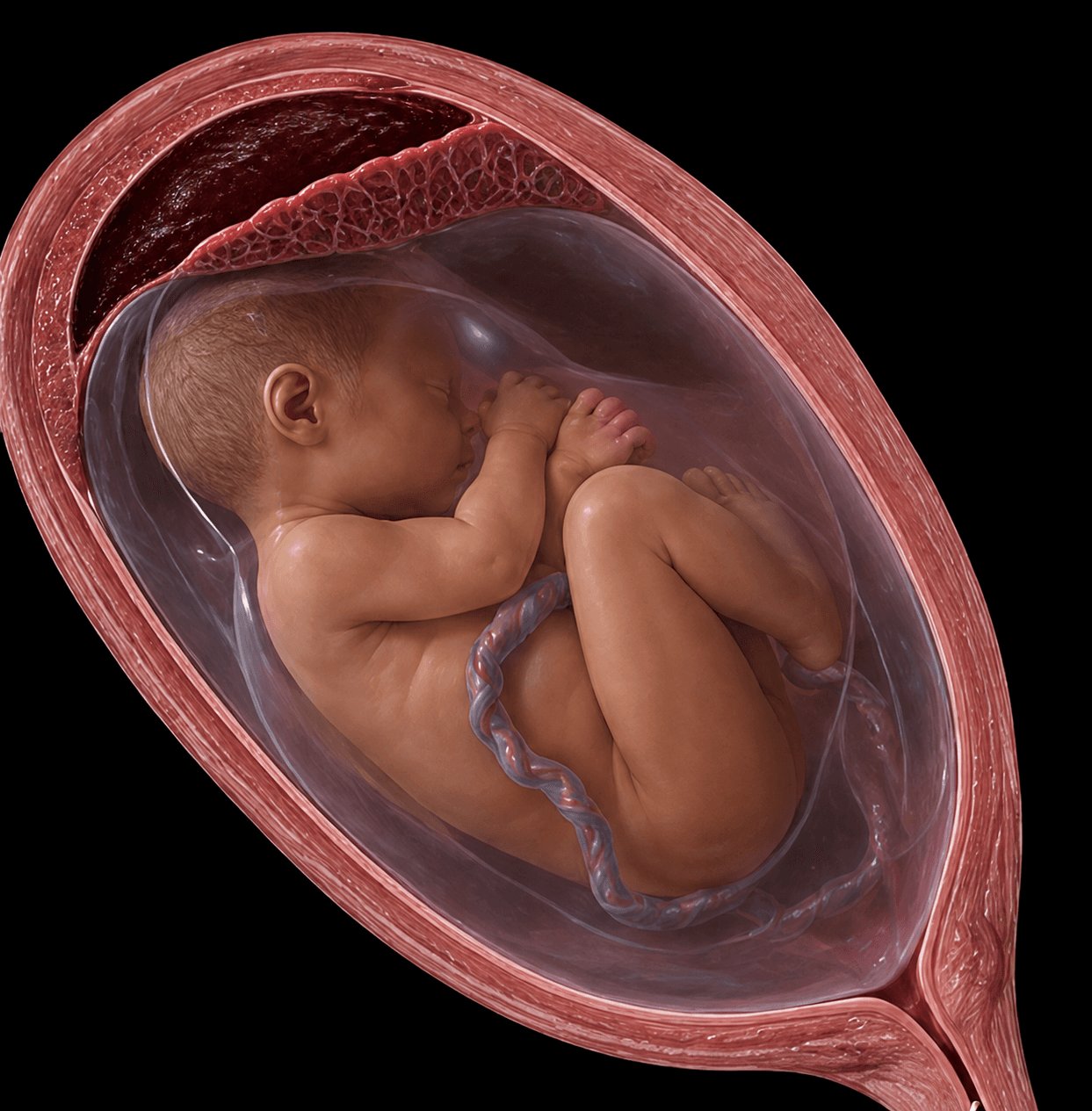
Premature separation of a normally implanted placenta from the uterine wall after 20 weeks' gestation. Separation triggers retroplacental hemorrhage that may be revealed (vaginal bleeding), concealed (trapped behind the placenta), or mixed. Graded marginal (grade 1) to complete separation (grade 3) with fetal demise.
Signs & Symptoms
EarlyProgresses →
Sudden, constant abdominal pain Hallmark
not intermittent like contractionsBack pain
Dark red vaginal bleeding Hallmark
Rigid, board-like uterus Hallmark
hypertonic, tenderLate / Severe
Late decelerations
uteroplacental insufficiencyFetal bradycardia
Hypovolemic shock
may exceed visible blood lossKey Distinctions
Pain and uterine tone are the differentiators. Concealed hemorrhage means visible blood underestimates true loss — the patient can be in shock with minimal external bleeding.
Abruption vs. placenta previa
Placental abruptionPlacenta previa
PainPainful, suddenPainless
BleedingDark, may be concealedBright red, visible
UterusRigid/board-like, tenderSoft, non-tender
Placental abruption
- Pain
- Painful, sudden
- Bleeding
- Dark, may be concealed
- Uterus
- Rigid/board-like, tender
Placenta previa
- Pain
- Painless
- Bleeding
- Bright red, visible
- Uterus
- Soft, non-tender
Diagnostics & Labs
Monitor
Continuous electronic fetal monitoring
Uterine tone monitoring
Fibrinogen< 200 mg/dL = early DIC
falls earlier than PT/INR risesCBC with platelets
Coagulation studies
PT, INR, aPTTDiagnostic
Type and crossmatch
Pelvic ultrasound
~50% sensitivity; negative scan does NOT rule outInterventions & Priorities
Call for emergency assistance
Initiate continuous fetal monitoring
Two large-bore IV lines
rapid crystalloid resuscitationStat coagulation labs
include fibrinogenOxygen via non-rebreather mask
Left lateral positioning
displaces uterus off vena cavaPrepare for emergency cesarean
Treatments & Medications
Emergency cesarean delivery
for fetal distress or maternal instability; prompt delivery is definitiveCrystalloid fluid resuscitation
Blood product transfusion
for hemorrhage/DICTocolyticsHold
contraindicated; delays definitive deliveryComplications
Disseminated intravascular coagulation
Hypovolemic shock
Develops from ongoing loss that may be concealed behind the placentaFetal demise
Maternal hemorrhage
Report Nowescalate immediately
Massive or concealed hemorrhage
Hypovolemic shock
hypotension, tachycardiaFetal distress
late decels, bradycardiaAbsent fetal heart tones
verify first (reposition, maternal pulse, ultrasound); may mean fetal demiseFibrinogen below 200 mg/dL< 200 mg/dL
developing DICDisseminated intravascular coagulation
Frank DIC — the endpoint of the fibrinogen fall; abruption is the leading obstetric causeClinical Pearl
Painful + rigid + dark = abruption. Painless + soft + bright = previa. When the uterus feels like a rock and the patient is in agony, think separation.