NurseSavvy Cheat SheetProcedure
Stages of Labor
Overview
Labor has four stages, each with distinct landmarks and nursing priorities. Stage 1 (onset to full dilation) is the longest and is subdivided into latent, active, and transition phases. Stage 2 runs from complete dilation to birth. Stage 3 is delivery of the placenta. Stage 4 is the recovery period and carries the highest hemorrhage risk.
The four stages of labor
- Stage 1: dilationlatent -> active (6 cm) -> transition (8-10 cm); cervix 0 -> 10 cm
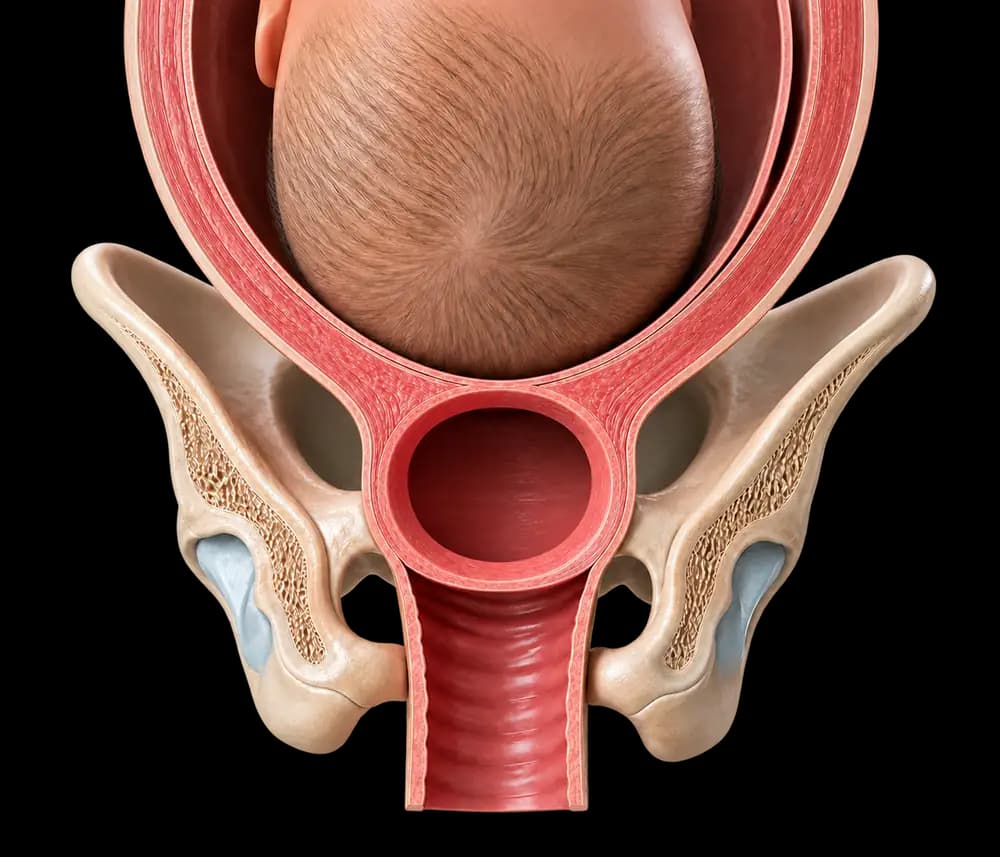
- Stage 2: birthcomplete dilation (10 cm, 100% effaced) -> delivery of infant
- Stage 3: placentaplacental delivery, ~5-30 min after birth
- Stage 4: recoveryfirst 1-2 h postpartum; q15min fundus, lochia, VS
Interpretation
Phases of Stage 1 by dilation and contraction pattern
LatentActiveTransition
Cervical dilation0-6 cm6-10 cm8-10 cm
Contractionsmild, irregularevery 2-3 min, 60-90 secevery 1.5-2 min, 60-90 sec, strongest
Patient behaviortalkative, mobileincreasing pain and focusirritable, nauseated, urge to push
Latent
- Cervical dilation
- 0-6 cm
- Contractions
- mild, irregular
- Patient behavior
- talkative, mobile
Active
- Cervical dilation
- 6-10 cm
- Contractions
- every 2-3 min, 60-90 sec
- Patient behavior
- increasing pain and focus
Transition
- Cervical dilation
- 8-10 cm
- Contractions
- every 1.5-2 min, 60-90 sec, strongest
- Patient behavior
- irritable, nauseated, urge to push
During — Monitoring
do not coach pushing before complete dilation HallmarkHold
Pushing at 9 cm risks cervical edema and prolonged labor despite transition urge to bear downcontinuous supportive presence in transition
Highest-priority comfort intervention when the patient feels unable to copecontrolled breathing for premature urge to push
Prevents bearing down before full dilationposition change
Side-lying or hands-and-knees promotes comfort and fetal descent in transitionMonitor
fundal assessment every 15 minutes in Stage 4 Hallmark
Fundus should be firm and midline; boggy or displaced fundus needs immediate interventionlochia assessment every 15 minutes
Quantify blood loss during the highest-risk hemorrhage windowvital signs every 15 minutes for first hour
Detects early hemodynamic changes after deliverybladder distention check
A full bladder displaces the fundus and contributes to atonyTechnique
assess fundus for firmness and position
Stage 4 step 1: a boggy or displaced fundus requires immediate interventionestimate and document blood loss
Step 2: objective quantitative blood loss within first 15 minutesassess vital signs every 15 minutes for first hour
Step 3: highest-risk period for hemorrhageevaluate perineum for hematoma and repair integrity
Step 4: expanding hematomas cause hemodynamic instabilityassist initial breastfeeding during golden hour
Step 5: stimulates endogenous oxytocin to contract the uterus and reduce bleedingAfter — Complications
arrest of active phase
At >=6 cm, no cervical change >=4 hours with adequate (>=6 hours with inadequate) contractions despite oxytocinfetal heart rate deceleration during pushing
Stop pushing and breathe until FHR recovers; resume only after return to baselineReport Nowescalate immediately
boggy uterine fundus Hallmark
Sign of uterine atony, the leading cause of Stage 4 postpartum hemorrhageexcessive lochia or blood gush
Stage 4 carries the highest hemorrhage risk; act before it becomes a crisisfetal heart rate drop to 90 bpm
Stop pushing, reposition, and intervene to restore uteroplacental perfusionexpanding perineal hematoma
Can cause concealed blood loss and hemodynamic instabilityno cervical change for 4+ hours at 6 cm or more
Active-phase arrest: 4 h with adequate or 6 h with inadequate contractions despite oxytocinClinical Pearl
"1-2-3-4: dilate, push it out, placenta out the door, watch the bleeding on the floor." Stage 4's every-15-minute fundal and vital checks catch hemorrhage before it becomes a crisis.